
Pallet Dimensioning for Forklift and AGV Workflows
Design pallet dimensioning handoffs for forklifts and AGVs using controlled positioning, identity transfer, clearance, validation and exception recovery.
Sep 15,2026 | Jasper Lee
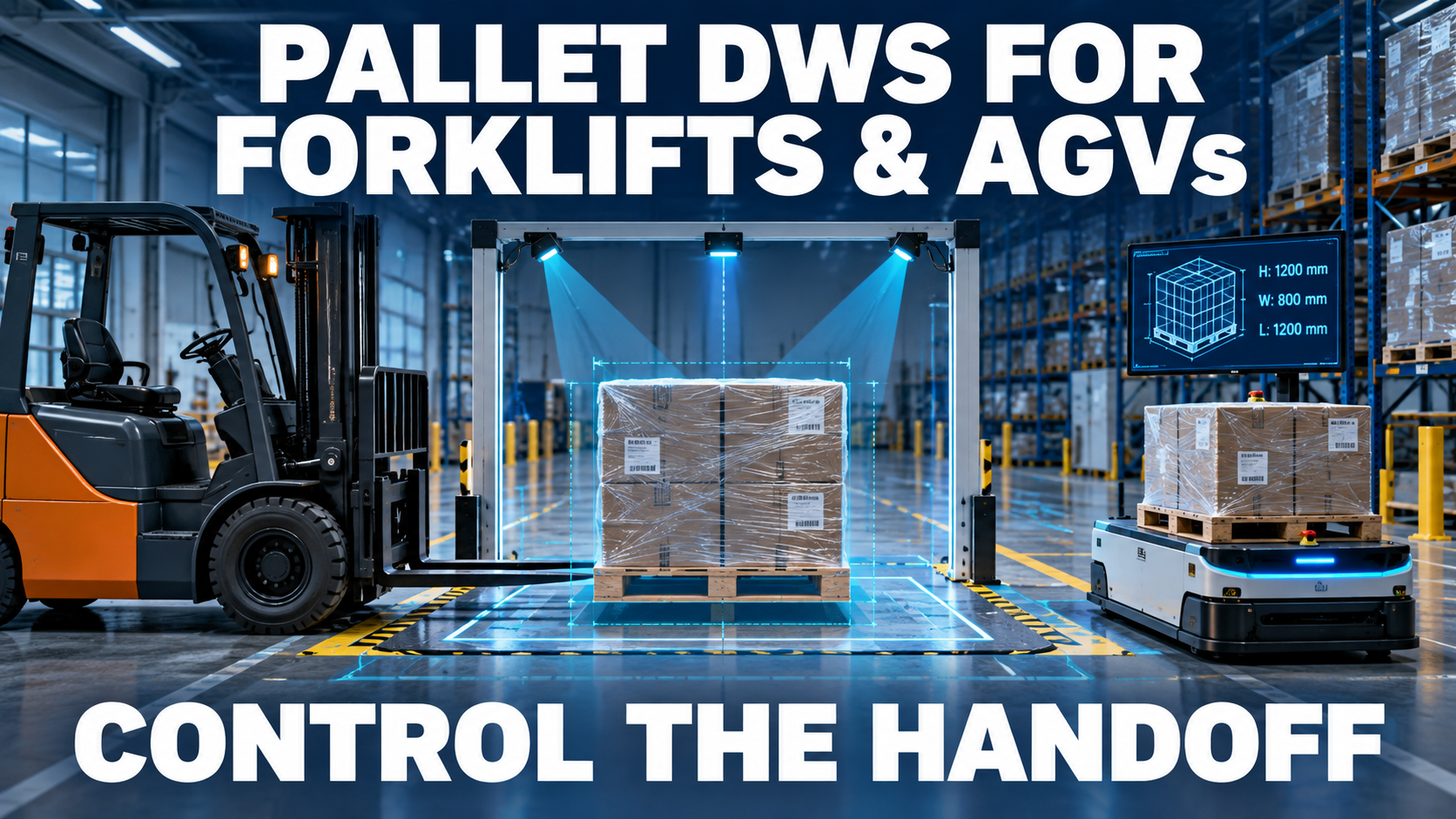
Direct answer: A forklift or AGV can present freight for pallet dimensioning when the workflow controls approach, final position, pallet identity, capture permission and departure. The vehicle must not be treated as invisible background: forks, mast position, vehicle motion and operator or controller acknowledgement are part of the measurement state.
CONLIDA is a DWS specialist focused on parcel dimensioning and physical logistics data capture. The engineering objective is a traceable physical-to-digital record, not an isolated measurement claim.
Start with a controlled handoff
Define who owns the pallet identity before entry, which signal authorizes capture, and which signal releases the vehicle. A scanned SSCC or WMS LPN should remain attached to the same physical unit throughout the cycle.
Separate transport from measurement
The presentation vehicle moves the load; the dimensioning system observes the accepted measurement envelope. Establish a stable pose, clearance from forks or mast, and a rule for whether the pallet base is included.
Design forklift and AGV paths differently
A driver can correct position using visual feedback. An AGV needs machine-readable zones, interlocks and deterministic recovery. Both require a safe exit path and a way to cancel an abandoned event.
Validate the full freight record
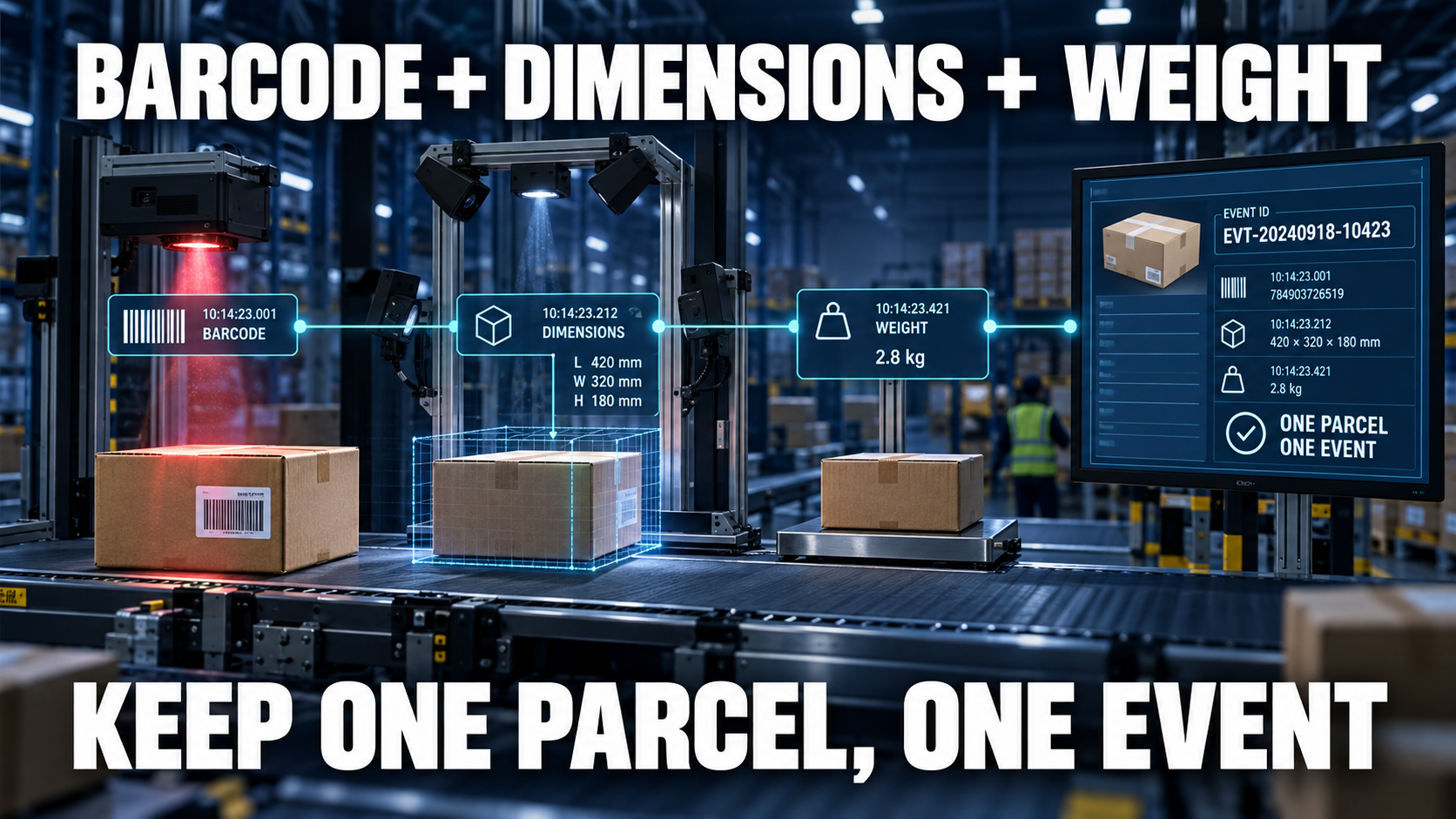
Accept only when identity, dimensions, optional weight, timestamp, station and quality status belong to the same cycle. Return an explicit acknowledgement to the vehicle controller or warehouse workflow.
Failure modes to test
| Failure mode | Operational consequence |
|---|---|
| Identity arrives before the pallet | Previous or next load receives the measurements |
| Forks remain in the envelope | Length or height is overstated |
| AGV departs before acceptance | Incomplete record enters the WMS |
| No recovery state | A blocked station stops material flow |
CONLIDA Engineering Note
Treat the vehicle-to-station boundary as a custody transfer for data. The most reliable sequence is request, identify, occupy, stabilize, measure, acknowledge and release. Skipping the acknowledgement step turns a physical success into an uncertain digital event.
Implementation checklist
- Define the physical object and identity rule.
- Document the accepted measurement envelope and units.
- Assign ownership for quality status and exceptions.
- Test representative normal and failure cases.
- Verify acknowledgement, retry and reconciliation.
- Retain evidence and change-control history.
Topic cluster and next step
- Parent concept article: How Pallet Dimensioning Works
- Related technical article: Bind Pallet Id Dimensions Weight
- Next-step buyer article: Questions To Ask Dws Supplier
- Relevant solution/use case: Review the application with CONLIDA
Sources
- GS1 — GS1 Logistic Label Guideline
- ISO — ISO 6780:2003 — Flat pallets
- Oracle — Oracle WMS Integration API Guide
Related Questions
Can a pallet remain on forklift forks during dimensioning?
Only if the selected system and measurement definition explicitly support that presentation. Fork and mast geometry must not contaminate the accepted envelope.
How does an AGV know measurement is complete?
Use a defined controller handshake with accepted, rejected or retry status—not an assumed timer.
Should the pallet be weighed in the same zone?
It can be when the platform and workflow support it; otherwise bind a separate stable weight observation to the same event.
What identifier should the vehicle provide?
Use the logistics-unit identifier required by the operation, such as SSCC or LPN, and record its type.
Comment