
How to Measure Irregular Parcels Without Hiding the Exceptions
Measure irregular parcels by defining the enclosing envelope, stable orientation, surface limitations, quality status and a controlled exception route.
Sep 15,2026 | Jasper Lee
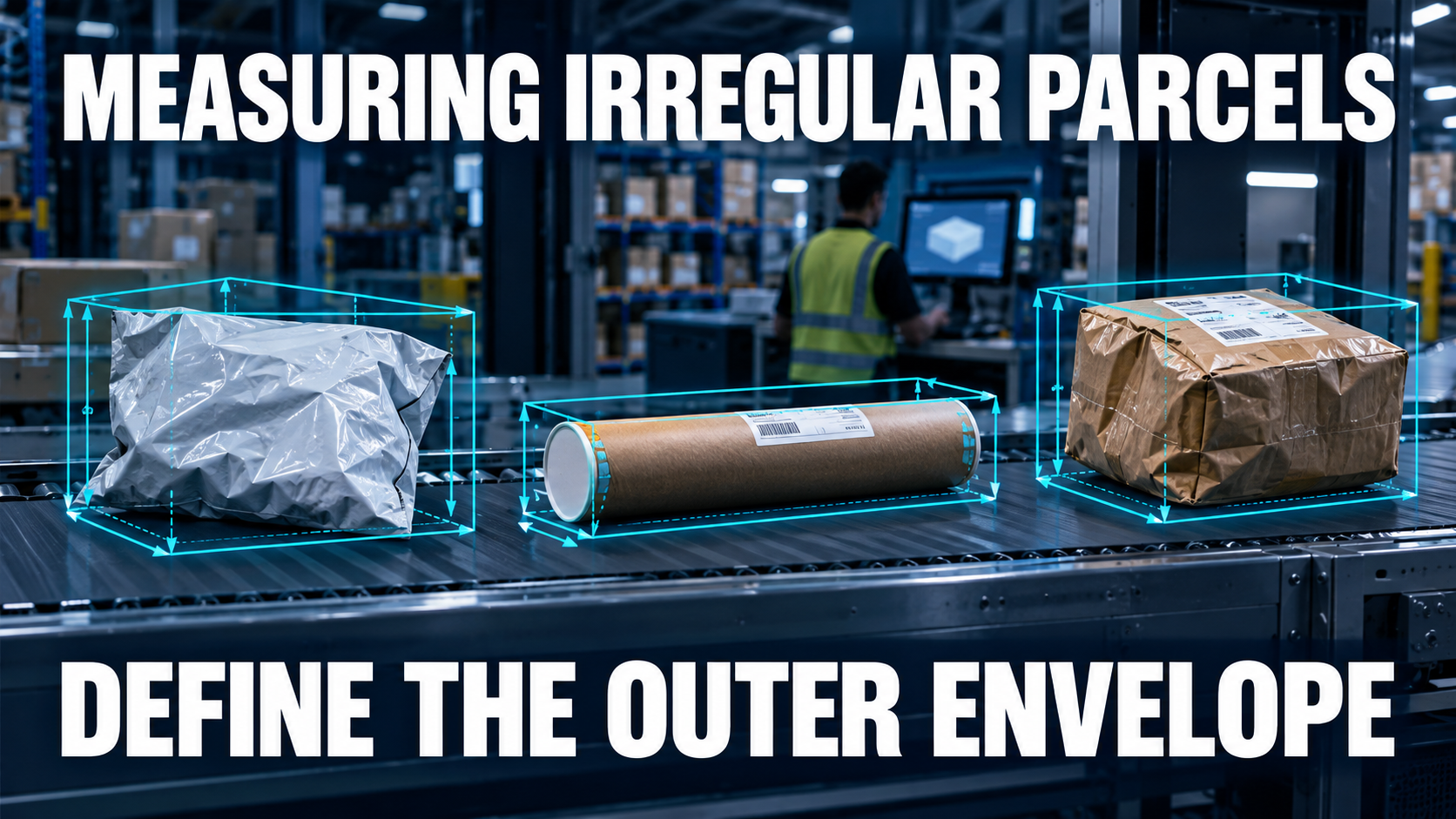
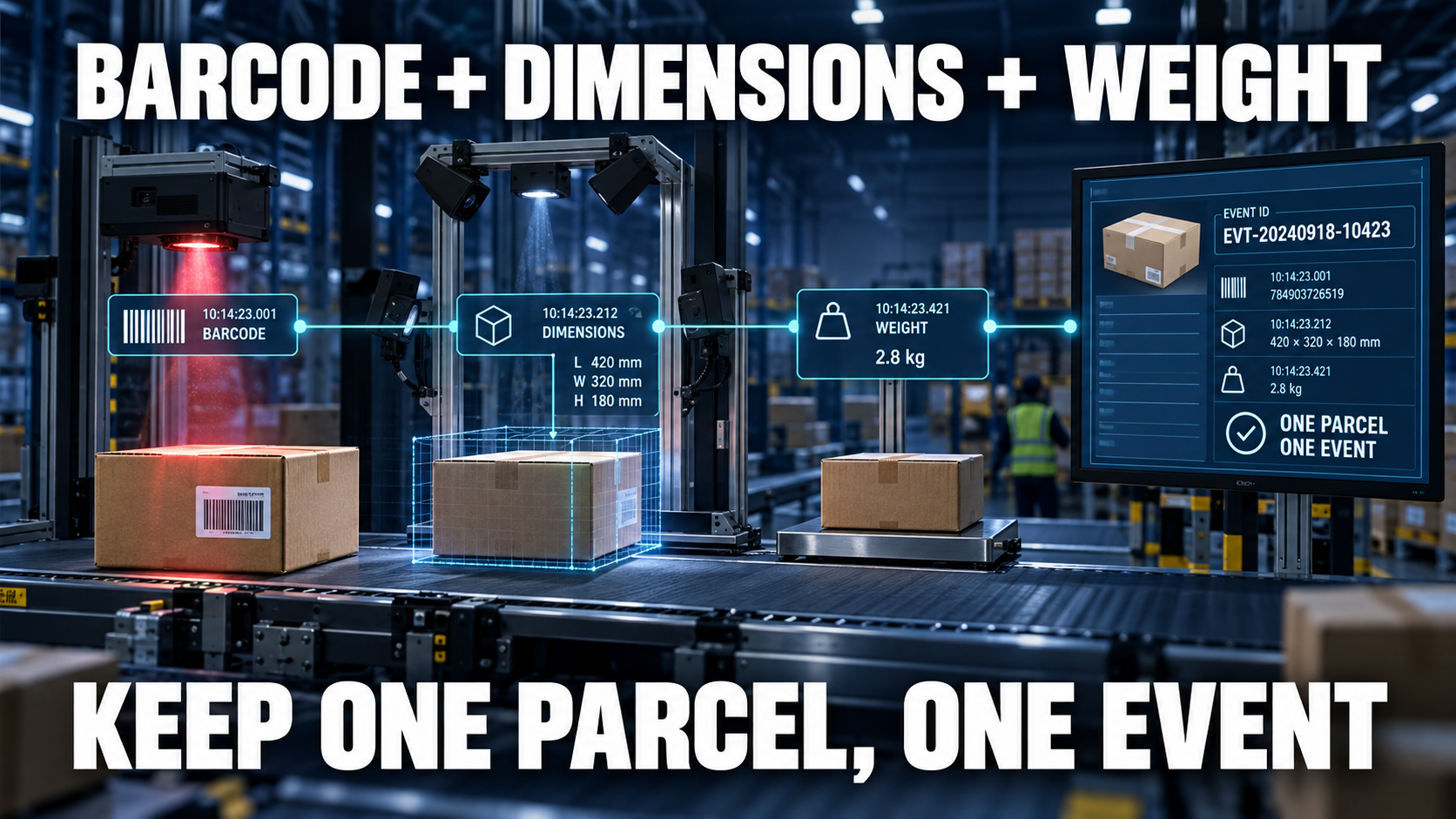
Direct answer: Measure an irregular parcel by first defining the business envelope—normally the smallest rectangular box that fully contains the object—then controlling its stable orientation, observing the outermost surfaces and returning a quality state with the dimensions. Items outside the validated surface, shape or motion envelope must be rejected or remeasured, not forced into a plausible-looking result.
CONLIDA is a DWS specialist focused on parcel dimensioning and physical logistics data capture. The engineering objective is a traceable physical-to-digital record, not an isolated measurement claim.
Define what the dimensions mean
OIML R 129 describes the length, width and height of the smallest rectangular parallelepiped that fully encloses a non-box object. That definition must match the downstream rating or storage decision.
Control the stable side and protrusions
Bags, tubes, handles, straps and loose flaps can change the occupied envelope. Specify which side is the transport side and whether temporary protrusions count.
Test surface behavior
Dark, reflective, transparent, rough and mixed surfaces interact differently with optical or acoustic methods. Validate representative materials under installed lighting rather than assuming every visible object is equally measurable.
Make exceptions visible
Return accepted, remeasure, manual review or out-of-profile status. Keep an image or reason code when it helps operators resolve the physical item.
Failure modes to test
| Failure mode | Operational consequence |
|---|---|
| Soft bag changes pose | Repeat captures produce different envelopes |
| Transparent wrap is ignored | The occupied boundary is understated |
| Tube rolls during capture | Orientation and dimensions become unstable |
| Invalid result lacks status | Downstream treats uncertainty as fact |
CONLIDA Engineering Note
For irregular items, repeatability often improves more by standardizing presentation than by adding post-processing. A defined stable side, quiet capture zone and explicit protrusion rule turn an ambiguous shape into a testable operating method.
Implementation checklist
- Define the physical object and identity rule.
- Document the accepted measurement envelope and units.
- Assign ownership for quality status and exceptions.
- Test representative normal and failure cases.
- Verify acknowledgement, retry and reconciliation.
- Retain evidence and change-control history.
Topic cluster and next step
- Parent concept article: How Parcel Dimensioner Works
- Related technical article: Static Vs Dynamic Dws
- Next-step buyer article: Questions To Ask Dws Supplier
- Relevant solution/use case: Review the application with CONLIDA
Sources
- OIML — OIML R 129-1:2020 — Metrological and technical requirements
- OIML — OIML R 129-2:2020 — Metrological controls and performance tests
- NIST — NIST Handbook 44 — Current Edition
Related Questions
What box should enclose an irregular parcel?
Use the measurement envelope defined by the applicable workflow or regulation; for many charge applications it is the smallest rectangular box that fully contains the object.
Can polybags be measured automatically?
Some can, but folds, movement and surface properties must be tested against the selected system's validated application envelope.
Should handles and straps count?
Count them when they affect occupied space under the agreed business rule; document the rule before deployment.
When should an item go to manual review?
When shape, surface, motion, identity or result quality falls outside the approved acceptance conditions.
Comment