How Parcel Spacing Affects Dynamic DWS Performance
Learn how parcel gap, conveyor speed, trigger timing and object length affect dynamic DWS separation, identity binding, weighing and throughput.
Sep 30,2026 | Jasper Lee

Direct answer: Parcel spacing affects dynamic DWS because the system must decide where one physical object ends and the next begins before it can bind the correct barcode, dimensions and weight. The required gap is therefore a time-and-distance constraint determined by conveyor speed, object length, sensor geometry, scale recovery and control latency.
CONLIDA is a DWS specialist focused on parcel dimensioning and physical logistics data capture. The engineering objective is a trustworthy one-object-to-one-record relationship at production speed.
Spacing is distance expressed as time
Cognex describes package spacing as a distance in time: faster conveyors require more physical space to preserve the same processing window. At 2 m/s, a 400 mm gap lasts 200 ms; at 1 m/s it lasts 400 ms. The useful window must cover object separation, trigger reset and downstream event handling.
Why touching parcels corrupt measurement
When parcels touch or overlap, a profile sensor may see one combined envelope. A barcode reader can observe labels from both objects, while a dynamic scale may not return to a valid state between loads. The result may be rejection, one oversized record, or—more dangerously—a plausible measurement attached to the wrong identity.
The minimum gap comes from the slowest subsystem
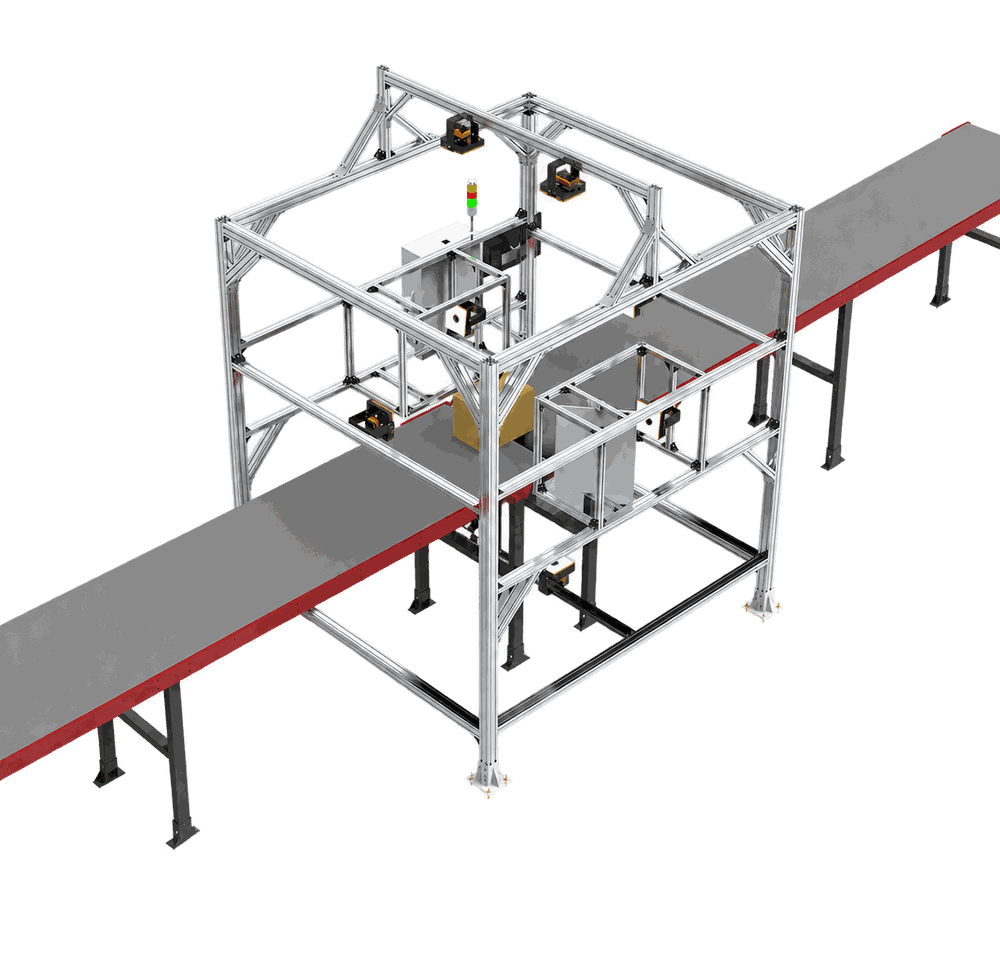
A DWS combines dimensioning, weighing, scanning, triggering and controls. Each module has its own acquisition zone and recovery time. The design gap must satisfy the most restrictive validated condition, including the tolerance of upstream singulation and belt-speed variation.
Object length changes the event window
Long parcels occupy sensing and weighing zones for more time. If the following parcel enters too early, the system may not obtain an isolated observation. Test the combination of maximum approved object length, maximum speed and minimum achievable gap rather than validating each value separately.
Gap control belongs upstream
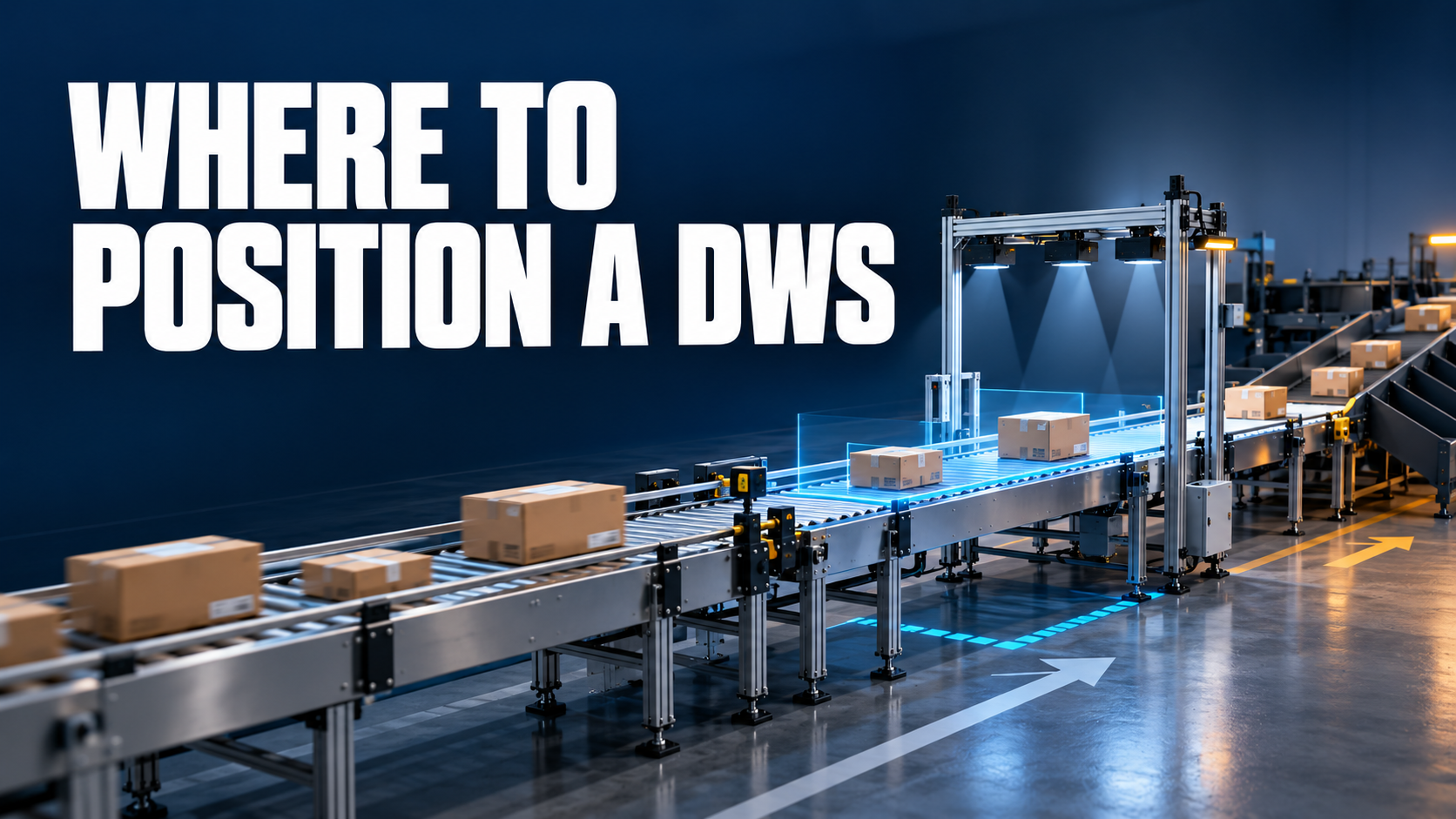
Photoeyes can detect poor spacing, but detection alone does not create separation. Accumulation conveyors, metering belts or controlled release logic should establish the gap before the measurement zone. SICK describes DWS configurations with integrated object individualization or gapping before weighing.
Engineering test matrix
| Condition | What to verify |
|---|---|
| Nominal gap | Stable identity, dimensions and weight |
| Minimum approved gap | No merged or cross-associated events |
| Below-minimum gap | Explicit reject or controlled recovery |
| Speed change | Timing remains valid across the range |
| Long followed by short parcel | Separate triggers and measurement IDs |
CONLIDA Engineering Note
Do not specify parcel gap as a single optimistic number copied from a datasheet. Specify it as a validated envelope tied to speed, length, presentation and exception behavior. A system is controlled when an insufficient gap produces a known disposition instead of an untraceable record.
Implementation checklist
- Map every sensing and weighing zone.
- Calculate gap time across the speed range.
- Validate maximum object length with minimum gap.
- Test touching, overlapping and side-by-side parcels.
- Define the reject and refeed workflow.
- Trend gap violations separately from device faults.
Topic cluster and next step
- Parent concept article: When Do You Need Dynamic DWS?
- Related technical article: Where Should DWS Sit on a Conveyor?
- Next-step buyer article: Questions to Ask a DWS Supplier
- Relevant solution: Review your parcel flow with CONLIDA
Sources
Related Questions
How much gap does a dynamic DWS need?
It depends on the validated combination of conveyor speed, object length, sensor layout, scale behavior and processing latency.
Can software fix touching parcels?
Software may detect or sometimes segment them, but a reliable design still needs physical separation or an explicit exception route.
Does a faster conveyor always require a larger gap?
For the same required processing time, yes: higher speed converts that time into a longer physical distance.
Should gap violations stop the conveyor?
Not always. The chosen response may be controlled divert, reject, refeed or stop, depending on risk and line design.
Comment